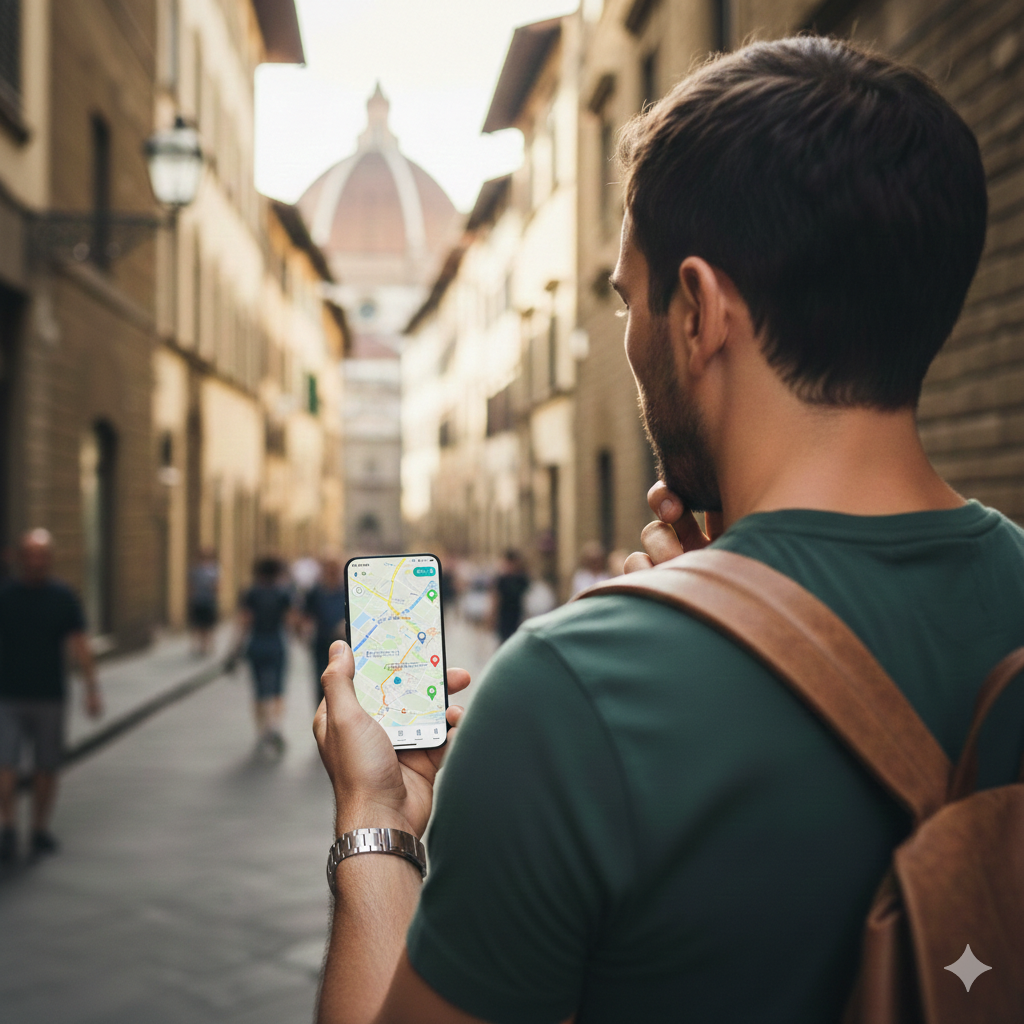
Google Maps to avoid getting lost in the alleys of Tokyo, a translation app to order a typical dish in Bangkok, or a last-minute hotel booking from a train in Morocco… It's hard to imagine a trip without the internet today!
However, the fear of a hefty bill upon returning from vacation remains real. So, how can you stay connected anywhere in the world without sacrificing your budget?
That's what we're going to see.
Can I use my French mobile phone plan abroad?
The answer is: It depends on your destination.
Within the European Union
Since 2017, a European agreement has made life easier for travelers within the European Union. Thanks to European roaming, your calls, texts, and mobile data are included in your national plan as if you were in France, without additional charges. This agreement covers the countries of the European Economic Area (EEA), as well as Iceland, Norway, and Liechtenstein.
Beware of exceptions! Some geographically close or European countries are not part of this agreement:
- Switzerland, Andorra and Monaco: Often excluded, the costs can be staggering.
- The United Kingdom: Since Brexit, inclusion is entirely dependent on your mobile operator.
- Turkey, Albania, or Montenegro: Generally outside of the package.
Outside Europe: The danger of roaming charges
As soon as you leave the area covered by your plan, you switch to paid roaming. In the United States, Japan, or Morocco, even the simplest web search can be expensive: some operators charge up to €13 per MB consumed. At this rate, a simple photo sent on WhatsApp can cost you dearly!
Can we rely on free Wi-Fi while travelling?
Free Wi-Fi at the airport or hotel can be a solution, but it has two major drawbacks:
- The lack of freedom: You remain "chained" to a specific location to obtain a connection.
- Security: Public networks are hunting grounds for hacking of banking or personal data.
Unless you are using a robust VPN, it is best to limit the use of public Wi-Fi to unimportant searches and to favour a secure mobile solution for your personal accounts.
Solution 1: The travel eSIM (The #1 choice in 2026)
The eSIM is a virtual SIM card already integrated into recent smartphones (iPhone 15, Samsung S24, etc.). It allows you to activate a prepaid and commitment-free travel plan in a completely digital way.
- Benefits : Instant installation from home, no small physical card to handle, and you keep your French number for WhatsApp.
- Usage: Ideal for mobile data. You buy your GB and most importantly: You are connected as soon as you land.
Solution 2: The local SIM card
This is the classic method. You buy a physical SIM card in a shop at the airport or in town upon arrival.
- Benefits : You get a local phone number, which can be useful for calling local restaurants or services.
- Disadvantages: You often have to queue, understand the person you're speaking to, and above all, remove your French SIM card (at the risk of losing it). Furthermore, you'll remain without internet access until your new SIM card is inserted.
Solution 3: The Pocket Wi-Fi (The mobile router)
It's a small device that transforms the local mobile network into a Wi-Fi signal for your devices.
- Benefits : Allows you to connect multiple devices simultaneously (computer, tablet, phones for the whole family).
- Disadvantages: It's one more device to charge and carry around. Furthermore, daily rental can quickly become more expensive than an eSIM.
Summary table: Which solution to choose?
| Criteria | travel eSIM | Local SIM card | Pocket Wi-Fi |
| Facility | Instant (digital) | Manual (shop) | Physical case |
| Price | Highly competitive | Very low | Medium to high |
| Practicality | Maximum | Average (SIM change) | Low (bulky) |
| Local number | Rarely | Yes | No |
| Internet connection sharing | Yes (at Miio) | Yes | Yes |
3 Tips to Save on Mobile Data
Even with a good plan, saving your data allowance allows you to make your subscription last longer:
- Anticipate: Download your Google Maps and Spotify playlists for offline use before leaving the hotel.
- "Data saving" mode: Enable it in your phone's settings to prevent apps from consuming data in the background.
- Use the "Lite" versions: Applications like Facebook Lite or Google Maps Go consume up to 90 % less data.
💡 Ready to take the plunge for your next departure?
Now that you know the different ways to stay connected, why not prepare for your next adventure with complete peace of mind?
👉 Discover what an eSIM is and how it works.